The 8-Hour Funding Reset: How Perpetual Markets Telegraph Their Next Move
Funding rates reset every 8 hours across all major perpetual exchanges. That rhythm isn't just a settlement mechanism — it's a predictable pressure cycle that precedes price moves most traders never see coming.
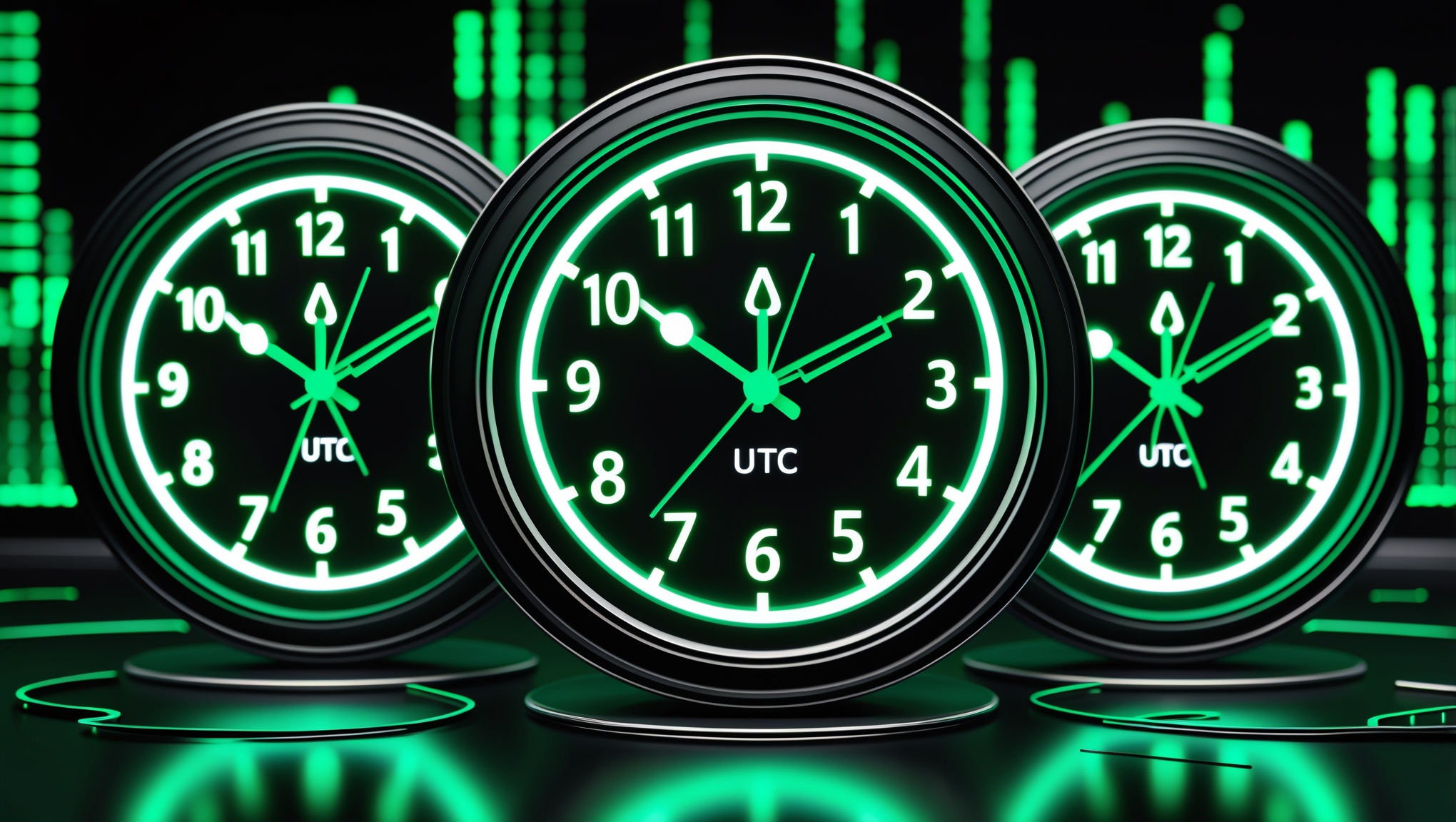
Every 8 hours, the crypto market exhales.
That exhale is the funding rate settlement — the moment when longs pay shorts (or shorts pay longs) to keep perpetual futures tethered to spot price. Most traders treat this as a technical footnote. Sophisticated participants treat it as a clock.
Why Perpetuals Need Funding
Perpetual futures contracts have no expiration date. This is what makes them the dominant product in crypto derivatives — you can hold exposure indefinitely without rolling contracts.
But without expiration, the price would drift from spot. The funding rate mechanism solves this. When perpetual price trades above spot, longs pay shorts. When it trades below spot, shorts pay longs. The payment cycles every 8 hours on most exchanges.
The rate itself is a real-time signal of market sentiment and leverage positioning.
Reading the Rate, Not Just the Price
A positive funding rate means the market is net-long and willing to pay a premium to hold that exposure. When funding goes deeply positive — above 0.1% per 8 hours — you're looking at a crowded long trade. That creates predictable dynamics.
The liquidation trigger scenario: Deeply positive funding → longs are paying a daily carry cost → any price weakness forces marginal longs out → the selling accelerates as liquidations cascade.
The negative funding setup: Deeply negative funding → shorts are crowded → any upward pressure forces covering → short squeeze amplifies the move.
The InDecision Framework tracks funding as its first daily pattern signal because the 8-hour rhythm creates reliable setup windows.
The 3-Window Day
Here's how InDecision structures the funding cycle:
00:00 UTC reset — This is the overnight window. Funding that built during the Asian/European session gets settled. Watch for price compression before this reset; the settlement releases pressure.
08:00 UTC reset — The London-to-New York handoff window. Funding that built during European hours gets cleared. This is often where you see the true direction of the day establish.
16:00 UTC reset — The US afternoon reset. The most liquid window. Funding that accumulated during the US session releases. This is where InDecision often captures the highest conviction signals.
What Extremes Tell You
When funding gets extreme in either direction, it's a warning signal — not necessarily a trade signal, but a positioning alert.
Above +0.15% per 8 hours: The long side is too crowded. The market is paying an annualized rate north of 150% to hold longs. That's not sustainable. Either price moves so far up that shorts capitulate, or the weight of that carry causes the long side to bleed out.
Below -0.10% per 8 hours: The short side is under pressure. Someone is very confident in their short position and willing to pay for it. These crowded short setups often compress quickly when the narrative shifts.
InDecision tracks these extremes as a factor in the overall bias score — not as standalone signals, but as context that weights other factors.
The Carry Cost Calculation
If you're trading perpetuals and ignoring the carry, you're leaving money on the table in the wrong way.
A funding rate of 0.1% per 8 hours is 0.3% per day, 2.1% per week, roughly 9% per month. If your trade takes two weeks to play out, you're paying an 4.2% carry cost on top of the move you need to capture.
This is why InDecision's risk context factor explicitly considers the carry environment before sizing into positions. High positive funding narrows the margin for error on long trades. High negative funding narrows the margin for error on shorts.
The Setup InDecision Watches For
The most reliable funding-based setup isn't the extreme itself — it's the normalization after an extreme.
When funding has been deeply positive for 24-48 hours and then begins to drop toward neutral, the long-side leverage is unwinding. That unwind can happen through price decline (liquidations) or through time (traders paying carry until they exit). Watching for this normalization alongside volume confirmation is how InDecision turns funding data into actionable bias.
The 8-hour clock runs continuously. Learning to read it is how you stop being the liquidity — and start taking it.
Explore the Invictus Labs Ecosystem

// FOLLOW THE SIGNAL
Follow the Signal
Stay ahead. Daily crypto intelligence, strategy breakdowns, and market analysis.
Get InDecision Framework Signals Weekly
Every week: market bias readings, conviction scores, and the factor breakdown behind each call.