The Four Cognitive Biases That Kill Crypto Trades (And the InDecision Fix)
Most trading losses aren't caused by bad analysis — they're caused by cognitive biases that corrupt good analysis. InDecision was built explicitly to eliminate these four.
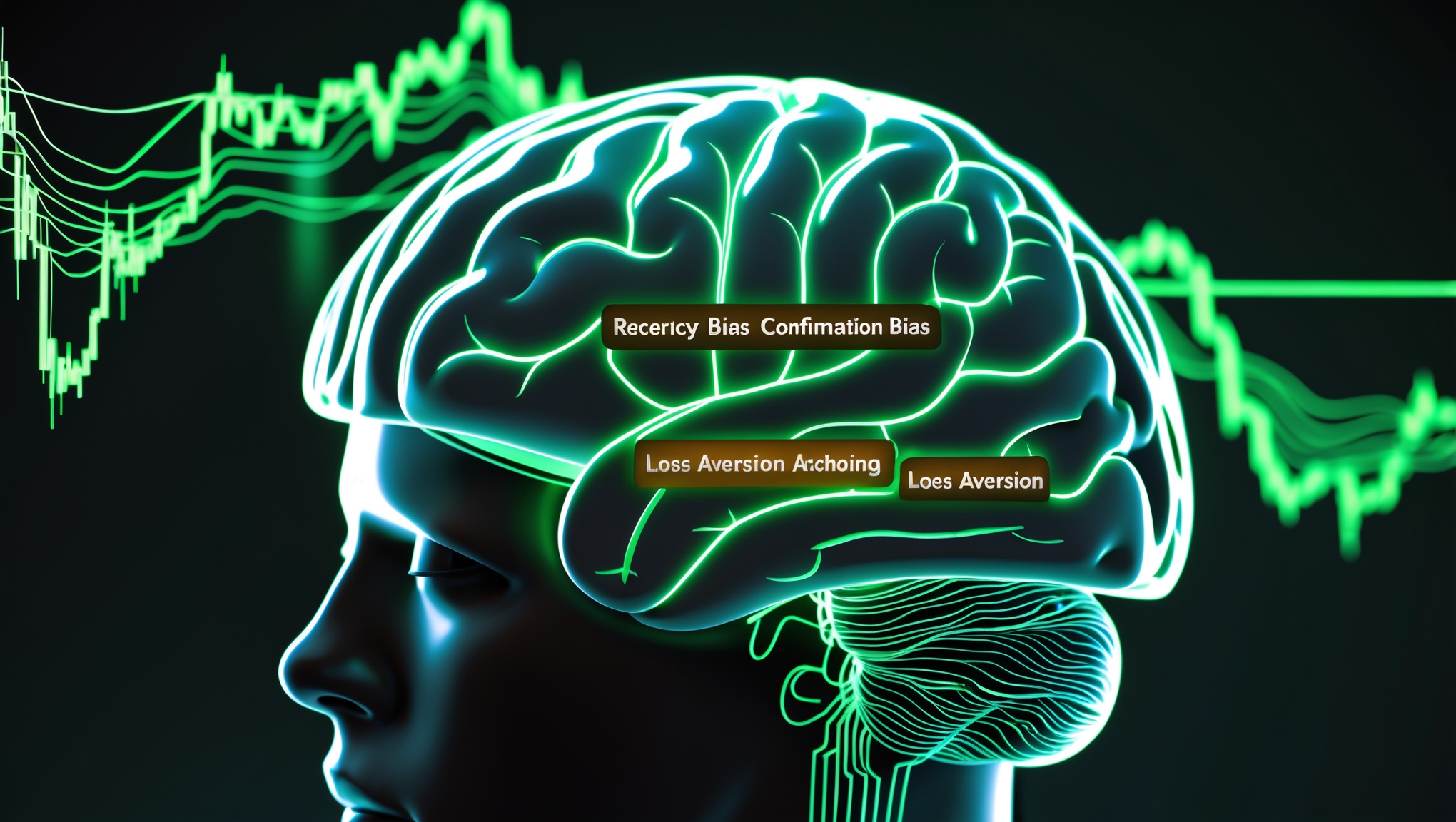
The market doesn't beat you. Your brain does.
After seven years of trading crypto and watching hundreds of traders through Hive Mind Crypto, I've identified four cognitive biases that account for the majority of trading losses. Not bad entry points. Not bad market conditions. Bias.
InDecision wasn't designed to predict markets. It was designed to remove the human from the prediction process.
Bias #1: Recency Bias
What it is: Your brain overweights recent events. If Bitcoin dumped 15% yesterday, your brain treats another 15% dump as likely today. If it pumped 20% last week, your bias toward more upside is inflated.
How it kills trades: You stay in a losing trade too long because "it was just at $95k two weeks ago." You exit a winning trade too early because you remember the last time it reversed from this level.
The InDecision fix: The framework weights six factors over different time horizons, not just recent price action. Daily pattern (30% weight) covers the macro context. Volume analysis (25%) uses normalized data, not recent averages. Recency gets one vote, not six.
Bias #2: Confirmation Bias
What it is: Once you've decided on a trade direction, you selectively consume information that confirms the thesis and discount information that challenges it.
How it kills trades: You find five analysts who agree with your long thesis. You ignore the three who don't. You read the bullish news and close the bearish news. You tell yourself the sell signal was "noise."
The InDecision fix: The framework runs all six factors before a bias is declared. You don't set a bias first and score factors second — the factors score independently and the bias emerges from the aggregate. There's no "I think it's going up, let me see what InDecision says." InDecision tells you what it says. Period.
Bias #3: Loss Aversion
What it is: Losses feel approximately twice as painful as equivalent gains feel pleasurable. This creates asymmetric behavior: you hold losing trades too long (avoiding the pain of realizing the loss) and cut winning trades too early (locking in the pleasure of a gain before it reverses).
How it kills trades: Your actual trade results are consistently worse than your analysis suggests they should be because you're managing by emotion, not by plan.
The InDecision fix: Conviction scores (the 0-100 output from the framework) directly drive position sizing and management rules. When conviction is high, you hold. When conviction degrades below a threshold, you exit — regardless of whether you're in profit or loss. The framework removes the emotional variable from the management equation.
Bias #4: Anchoring Bias
What it is: You become anchored to a specific price point — usually your entry price or a significant recent high/low — and make decisions relative to that anchor rather than relative to current market structure.
How it kills trades: You're down 20% on a position and your target is "get back to breakeven" rather than "is this still the right trade." You refuse to take profits at 8x because you remember when the token was at 12x. Your anchor is corrupting your decision-making.
The InDecision fix: InDecision doesn't know your entry price. It doesn't care. The framework evaluates current market structure and outputs a current bias. If the bias has flipped, the trade is wrong — regardless of where you entered. Your entry price is irrelevant to market structure.
The Common Thread
All four of these biases have the same root: they substitute emotion and memory for analysis. The cure isn't discipline — discipline fails under pressure. The cure is a system that operates without access to your emotional state.
That's the entire point of InDecision. Not to be smarter than the market, but to be less human in how you process it.
The math doesn't have feelings. That's the edge.
Explore the Invictus Labs Ecosystem
// FOLLOW THE SIGNAL
Follow the Signal
Stay ahead. Daily crypto intelligence, strategy breakdowns, and market analysis.
Get InDecision Framework Signals Weekly
Every week: market bias readings, conviction scores, and the factor breakdown behind each call.